
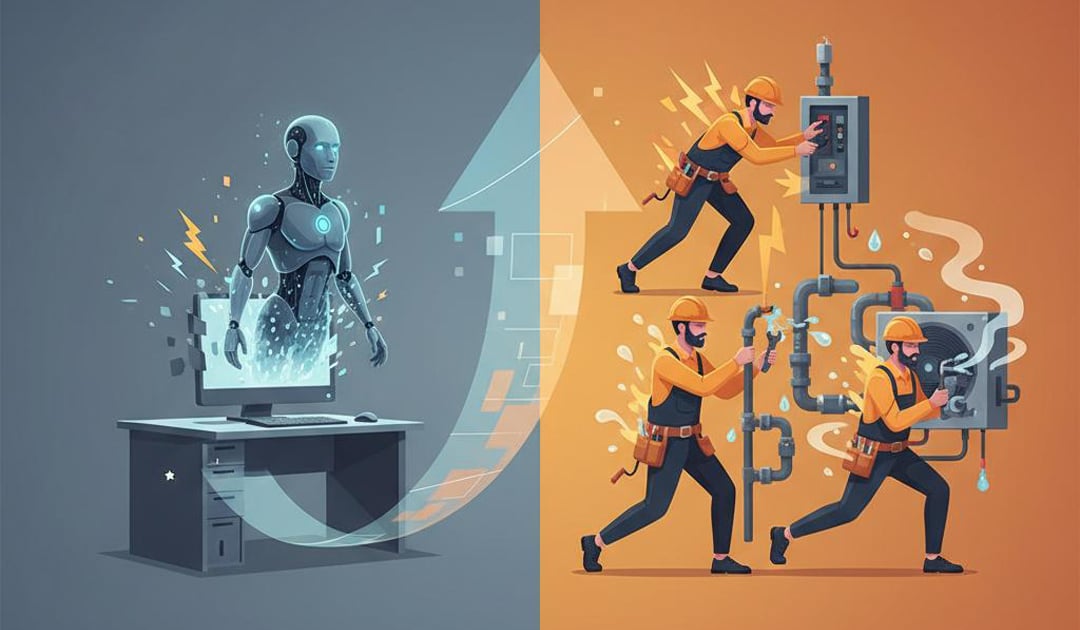
The job market is experiencing a seismic shift. While artificial intelligence threatens to automate millions of white-collar positions, blue-collar jobs are experiencing unprecedented growth and demand. For workers seeking stable, well-paying careers that can't be replaced by algorithms, skilled trades represent the ultimate job security in our AI-driven future.
The Great Career Reversal: Why Blue-Collar is the New White-Collar
Recent data reveals a stunning reversal in career preferences. According to a 2025 Resume Builder study, 40% of college graduates are now choosing blue-collar careers over traditional office work. This isn't just a trend—it's a fundamental shift in how we view career success and job security.
The Numbers Don't Lie: Blue-Collar Job Growth Statistics
- 1.7 million new blue-collar jobs expected by 2032 (Forbes, 2024)
- 35% of the fastest-growing occupations are blue-collar positions
- 6.3% salary increase for union workers in the past year alone
- Zero AI displacement risk for hands-on skilled trades
Why AI Can't Touch Skilled Trades: The Automation-Proof Advantage
The Physical Reality Barrier
Unlike data entry, customer service, or even some medical diagnostics, skilled trades require:
Physical Problem-Solving: Every electrical installation, plumbing repair, or HVAC system is unique. These jobs demand real-world problem-solving that AI simply cannot replicate.
Tactile Expertise: The ability to feel when a connection is secure, hear when a system isn't running correctly, or see subtle signs of wear requires human sensory input that robots can't match.
Adaptive Thinking: Trade professionals constantly adapt to unexpected situations—from discovering outdated wiring behind walls to working around structural obstacles that weren't in the original blueprints.
Microsoft's AI Job Threat Analysis: Trades Win Big
Microsoft's recent analysis of AI job displacement identified the 40 most threatened positions—nearly all were office-based roles including:
- Historians and researchers
- Translators and interpreters
- Customer service representatives
- Data analysts and administrative assistants
Notably absent from the threat list: Electricians, plumbers, HVAC technicians, and other skilled trades professionals.
The Gen Z Career Revolution: Why Young Workers Are Choosing Trades
Financial Freedom Without Student Debt
Today's career-savvy Gen Z workers are making calculated decisions:
- 60% want to earn income sooner rather than spending 4+ years in college
- 40% specifically want to avoid student loan debt
- Average trade school duration: 6-18 months vs. 4+ years for college
- Immediate earning potential: Many trades offer $50,000+ starting salaries
The Real Cost Comparison
| Traditional College Path | Trade School Path |
|---|---|
| 4+ years education | 6-18 months training |
| $30,000-$100,000+ debt | $5,000-$20,000 investment |
| Delayed income | Immediate earning potential |
| AI displacement risk | AI-proof career security |
High-Demand, High-Pay Skilled Trades: Your Career Options
Electrical Work: Powering the Future
- Median Salary: $56,040-$98,720 annually
- Job Growth: 8% (faster than average)
- Specializations: Residential, commercial, industrial, renewable energy systems
- Why It's AI-Proof: Requires complex problem-solving, safety expertise, and physical installation skills
Plumbing: Essential Infrastructure Expertise
- Median Salary: $51,450-$90,950 annually
- Job Growth: 5% (steady demand)
- Specializations: Residential service, commercial systems, green plumbing technology
- Why It's AI-Proof: Every plumbing situation is unique, requiring hands-on diagnosis and repair
HVAC Technology: Climate Control Specialists
- Median Salary: $48,730-$77,350 annually
- Job Growth: 13% (much faster than average)
- Specializations: Residential comfort, commercial systems, energy efficiency
- Why It's AI-Proof: Requires technical knowledge, physical installation, and real-time system diagnostics
Construction Trades: Building America's Future
- Median Salary: $45,590-$89,300 annually
- Job Growth: 4-11% depending on specialty
- Specializations: Carpentry, masonry, roofing, specialty construction
- Why It's AI-Proof: Requires creative problem-solving and adaptation to unique job site conditions
The Hidden Benefits of Blue-Collar Careers
Job Security Beyond AI Protection
Essential Services: Skilled trades provide services that society cannot function without. Electricity, plumbing, heating, and construction are fundamental human needs.
Local Market Protection: These jobs cannot be outsourced overseas. Your local community will always need skilled trade professionals.
Recession Resistance: Even during economic downturns, people need basic infrastructure maintenance and emergency repairs.
Entrepreneurship Opportunities
Many skilled trades professionals eventually start their own businesses, offering:
- Higher earning potential through business ownership
- Flexible scheduling and work-life balance
- Community respect and local business relationships
- Scalable income through hiring and training others
Physical and Mental Health Benefits
- Active work environment promotes physical fitness
- Tangible results provide job satisfaction and mental well-being
- Problem-solving challenges keep minds sharp and engaged
- Team collaboration builds strong professional relationships
Getting Started: Your Path to a Skilled Trade Career
Choose Your Training Path Wisely
When selecting a trade school program, consider:
Program Comprehensiveness: Look for programs covering 265+ hours of hands-on training Industry Connections: Schools with strong employer relationships Flexible Scheduling: Options for full-time (12 weeks) or part-time (6-12 months) completion Multiple Specializations: Ability to earn certifications in additional trade areas
What to Expect in Quality Trade Training
Hands-On Learning: Real-world practice with actual tools and equipment Safety Certification: OSHA compliance and workplace safety training Code Knowledge: Understanding local and national building codes Technology Integration: Modern tools and diagnostic equipment training Soft Skills Development: Customer service, business basics, and professional communication
Financial Planning for Trade School
Investment Range: Most quality programs cost $5,000-$20,000 Financing Options: Federal financial aid, payment plans, employer sponsorship ROI Timeline: Most graduates recoup training costs within 6-12 months of employment Lifetime Earnings: Skilled trades professionals often out-earn college graduates over their careers
The Future is Bright for Skilled Trades
Emerging Opportunities
Green Technology: Solar installation, energy-efficient systems, and sustainable building practices Smart Home Integration: IoT devices, home automation, and advanced building systems Infrastructure Modernization: Aging American infrastructure needs massive updates and repairs Baby Boomer Retirement: Millions of experienced tradespeople retiring, creating job openings
Technology Enhancement, Not Replacement
While AI threatens to replace office workers, technology in skilled trades serves as an enhancement tool:
- Diagnostic equipment helps identify problems faster
- Design software improves project planning and accuracy
- Mobile apps streamline scheduling and customer communication
- Advanced materials make installations more efficient and durable
Making the Smart Career Choice
The evidence is overwhelming: as AI reshapes the job market, skilled trades represent the smartest career investment for long-term security, financial success, and personal satisfaction.
Key Takeaways:
- AI-Proof Security: Skilled trades cannot be automated or outsourced
- Strong Financial Returns: High wages without crushing student debt
- Fast Entry: Start earning in months, not years
- Growing Demand: 1.7 million new positions expected by 2032
- Entrepreneurship Potential: Build your own business and community reputation
Your Next Steps:
- Research Programs: Look for comprehensive training covering 265+ hours
- Visit Facilities: See hands-on training environments and meet instructors
- Talk to Graduates: Connect with working professionals in your chosen field
- Plan Financing: Explore all funding options and calculate your ROI
- Start Soon: The sooner you begin, the sooner you'll be earning
Conclusion: The Time is Now
While white-collar workers worry about AI taking their jobs, skilled trades professionals are building the infrastructure of tomorrow. They're earning strong wages, enjoying job security, and building careers that artificial intelligence simply cannot touch.
The question isn't whether blue-collar jobs will survive the AI revolution—it's whether you'll be smart enough to join the millions of Americans who are already building AI-proof careers in the skilled trades.